
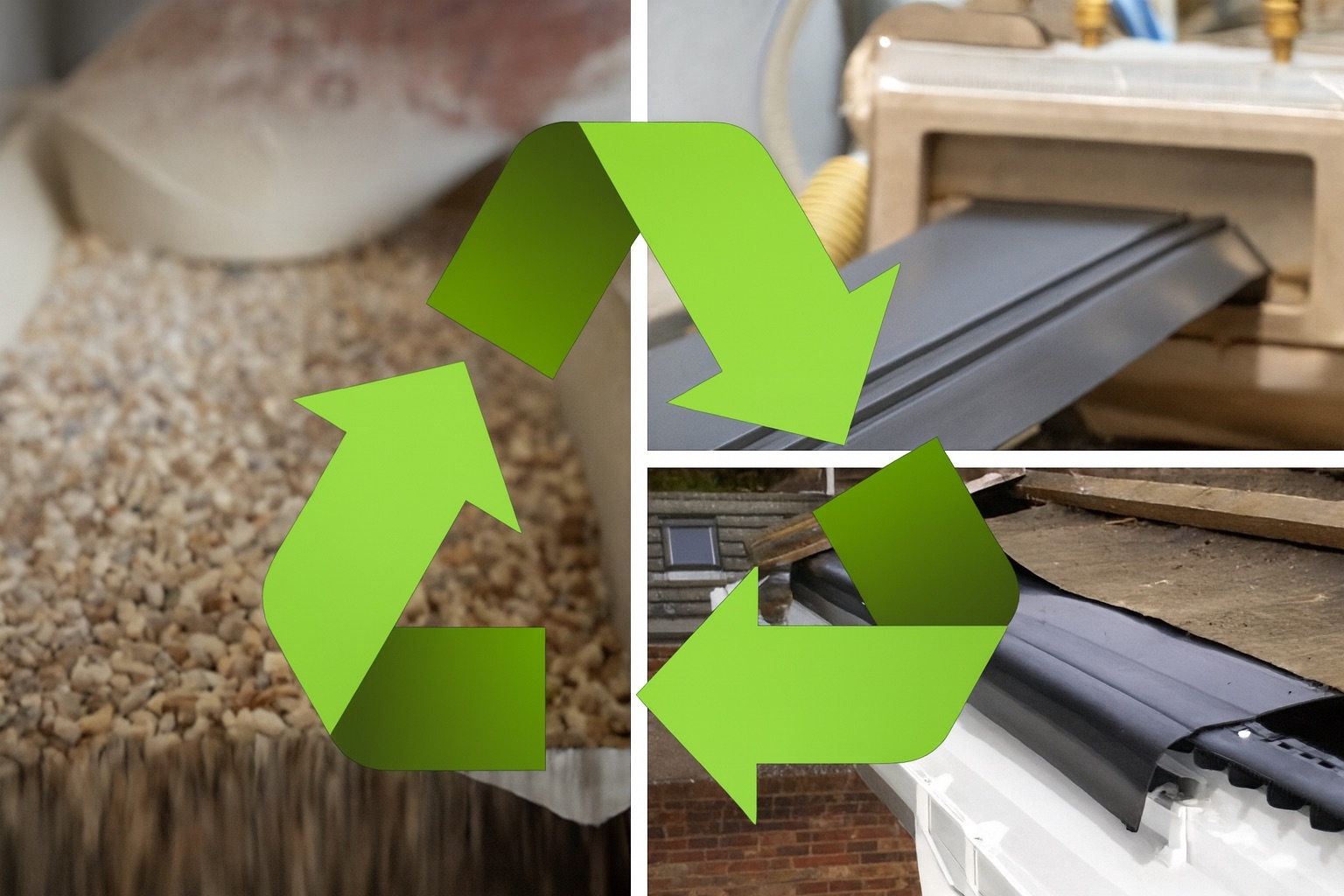

Eagley is proud to supply a wide range of durable and recyclable PVC compounds. PVC is an essential material in modern life, valued for its strength, versatility, and long lifespan. Unlike plastics often associated with single-use packaging or disposable items, PVC is predominantly used in critical infrastructure and applications that improve quality of life worldwide.
From delivering clean water and managing wastewater through durable piping and rainwater systems, to supporting healthcare with lifesaving medical products, enabling energy-efficient construction with advanced window profiles, and powering homes, schools, hospitals, and transport through reliable cables, PVC plays a vital role in building a more sustainable future and improving lives worldwide.
One of our key targets is to ensure that no PVC waste is sent to landfill. In fact, we go a step further by recycling over 300 tonnes of PVC waste from other suppliers each year, supporting the wider industry’s transition to a more circular economy. We have granulation and pulverising capacity to process 5,000tpa of waste material.
While many plastics are fully derived from oil, PVC is only 43% oil-based, with the remaining 57% sourced from salt – specifically as a by-product of caustic soda production. Caustic soda itself is an essential ingredient in products ranging from soaps and disinfectants to textiles, water treatment, and pharmaceuticals.
PVC’s strength, long service life, and recyclability further enhance its environmental credentials. Products such as pipes and window profiles can last for decades and, once they reach the end of their service life, they can be collected and recycled into new applications multiple times.
Eagley are proud to offer a wide range of durable and recyclable PVC compounds. PVC is an essential plastic in our daily lives. It is seldom used in single-use disposable applications such as packaging or straws, and is instead typically used in critical infrastructure which supports and improves lives around the world.
PVC pipes bring clean water to our homes and remove waste water. PVC rainwater and stormwater management systems, energy-efficient PVC window profile systems, and PVC power and data cables for homes, schools, hospitals and transport are just some examples. PVC blood bags and oxygen tubing are also widely used in healthcare.
Another reason PVC ranks highly as a sustainable polymer choice is its durability and its ability to be recycled. PVC is most commonly used in building and construction applications. In these uses, products such as pipes and window profiles can last for decades in service. More importantly, when they reach the end of their serviceable lifespan, they can be collected and recycled back into pipe, profile and other end uses. Because of PVC’s unique properties, this recycling process can happen multiple times, extending the life cycle of PVC products for many decades.
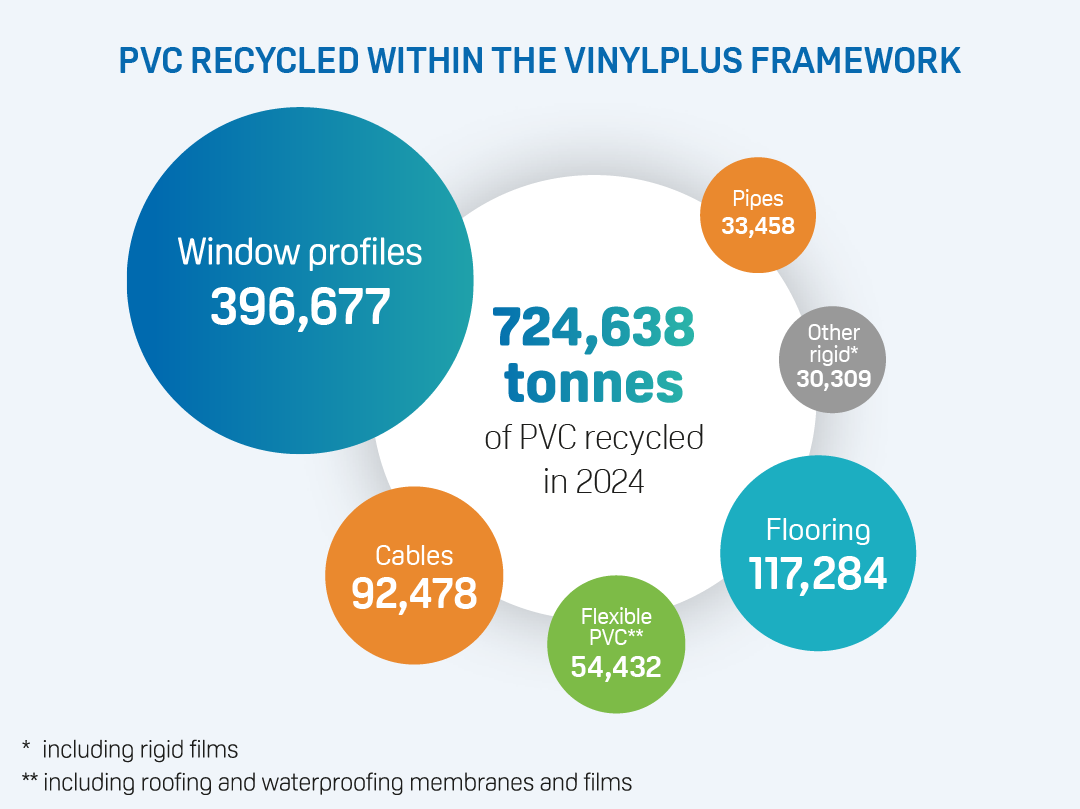
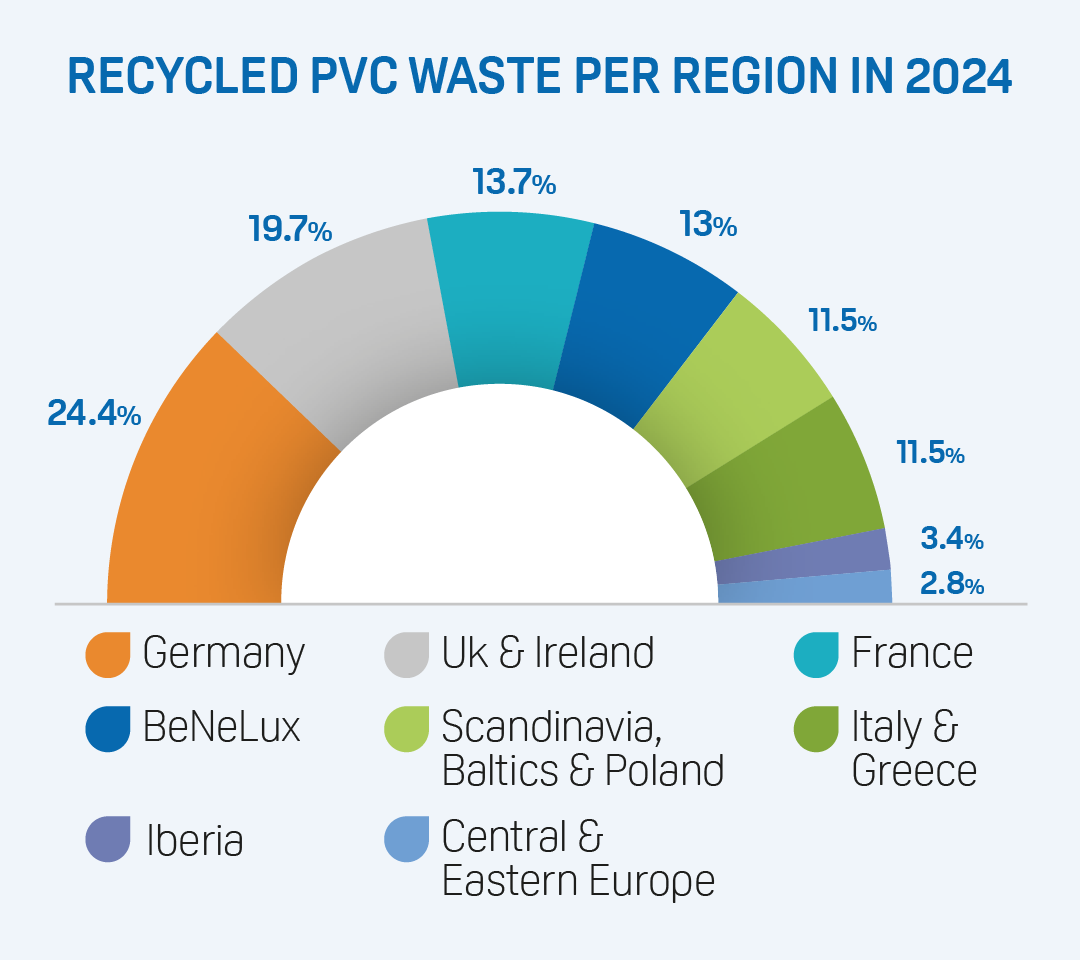
The VinylPlus organisation tracks the progress of this recycling across the various applications of PVC.
The information from VinylPlus shown below shows the progress in 2024:
The VinylPlus website is a great resource to take a deeper dive into the work that has been done , and the commitments being made to build on the successes to date. Click on the image below to find out more:

The PVC industry is proud to push ahead with sustainability initiatives guided and supported by organisations such as VinylPlus, the British Plastics Federation (BPF), European Plastic Converters (EuPC), The European Pipes and Fittings Association (TEPPFA), European Trade Association of Window System suppliers (EPPA), European Council of Vinyl Manufacturers (ECVM), European Stabiliser Producers association (ESPA), and European Plasticisers to name but a few. These organisations help individual businesses take a stakeholder view of our industry and work together towards the common goal of creating a more sustainable world.